Articles About Getting Hurt and Not Being Able to Play Sports Again
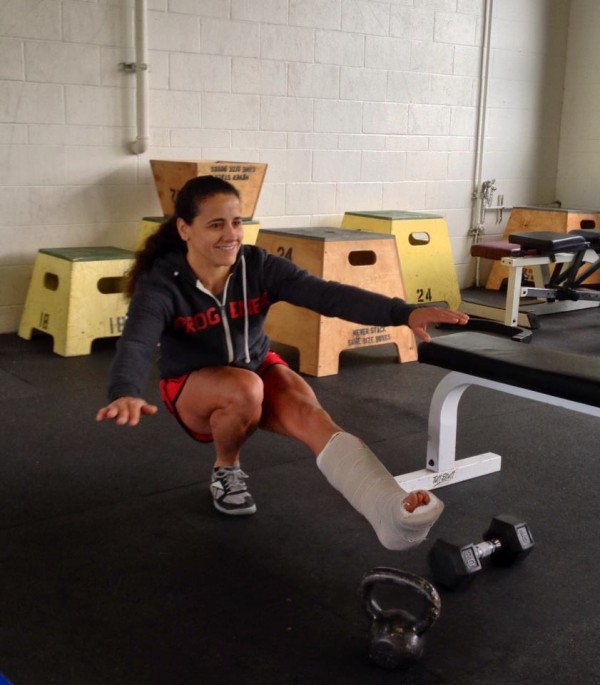
Coping with Injury: The Psychology of Being Sidelined
Invitee Post Written by Dr. Allison Belger, founder of PsychologyWOD
(Editor's Note – Allison is non only a psychologist and co-possessor of TJ's Gyms in Northern California, only is also a skillful friend and great resources to the entire CrossFit community. Please bookmark her website, which provides weekly articles addressing the non-physical aspects of training that nosotros tin can all amend upon.)
I love to run. Running offers me an adrenaline rush 2d to no other course of workout, and it maintains my cardiovascular fitness in ways other workouts don't. Yes, I'm a CrossFit athlete, and CrossFit workouts are what I do most often. But, at that place are some days when a good run, even if a short 1 after my gym conditioning, is merely what the doctor ordered. I lace up my shoes, grab my headphones, step outside, and let the soul feeding begin.
A few weeks ago, I registered for a women's soccer league and played in my first soccer game since college, over twenty years ago. I've toyed with the idea of soccer re-entry over the past few years, simply I've always held off, for fright of injury. For a number of reasons, I decided that now was the time to requite soccer a whirl. During my first game, I had an absolute blast. Thank you to my decent workout from years of CrossFit and relatively practiced retentivity of my soccer skills from days gone past (with plenty of touches on the ball over the years as a youth double-decker), I was a contributor on my team and had a blast. With merely a few minutes left in the game, I felt a sharp awareness in my hamstring as I accelerated towards the ball. Afterward a moment of panic, thinking I had strained or pulled it, I was able to happily continue playing for the rest of the game. A few days later, I went out for a morn run and was admittedly unable to brand my hamstring work for such purposes. Today, more than eight weeks subsequently, I'yard yet sidelined from the activity I dear virtually. Luckily, as a CrossFit coach and gym owner, I have plenty of other things I can do to maintain my fitness and my sanity, merely I'k starting to get antsy, and grouchiness is likely on the horizon.
Injuries tin can be devastating to individuals who are consistently active and/or are training for an event or ongoing participation in a sport. The physical repercussions are usually apparent, but the emotional and psychological sequelae are often less obvious. Back in 2009 while working on my thoracic spine, Dr. Kelly Starrett of MobilityWOD and San Francisco CrossFit and writer ofBecoming a Supple Leopard discussed the importance of recognizing the psychosocial aspects of physical injury. He and I chatted about how athletes tin can speedily experience a feeling of social disconnect when they are injured, specially when they are accustomed to being function of a community of athletes. Ironically, the same community that provides so much belonging and connection when one is able to participate (e.g. a CrossFit gym or team), tin can also feel like a source of disconnect when i cannot.
Since starting PsychologyWOD, I've received a number of requests for an article about the psychology of injury. As I reflected on my experience with athletes and immersed myself in the literature on injury and recovery, a few themes emerged, which I've highlighted below. When athletes are injured, they experience a range of emotions that may seem extreme or idiosyncratic but are actually well within the normal range of responses. Of course, there are many factors affecting the athlete'due south injury experience, including severity of injury, extent of sport participation, and pre-injury personality, but information technology is not uncommon for people to experience some or all of the following:
Isolation: Athletes ofttimes experience isolated and solitary when they are injured. This is especially true if they had been function of a team prior to injury or if their pursuit involved training with a grouping of athletes from whom they may now feel disconnected. (Ruddock-Hudson, O'Halloran, & Spud, 2012; Peterson, 2009; Russell, 2008). Forth with this experience of isolation may come an unwanted feeling of envy of those who are healthy and able to proceed participating in their sport or activity. Envy is an uncomfortable emotion and is oft accompanied past shame or guilt. Injured athletes should know that envy may exist part of their experience, especially when an injury is serious and long-term.
Anxiety: Athletes may experience heightened levels of anxiety, both regarding their sense of identity and their capacity for healing and recovery. Some studies fifty-fifty indicate symptoms of post-traumatic stress after an injury (O'Connor Sr., 2011; Brewer and Petitpas, 2005; Podlog and Eklund, 2007; Peterson, 2009; i; O'Neill, 2008; Appaneal, Perna, & Larkin, 2007). Athletes who fear re-injury may deport in ways that actually hinder their recovery and pb to re-injury, such as overdoing rehabilitation and recovery training, thereby taxing the injured parts in ways that are harmful instead of helpful (Andersen, Mubaidin, Tibbert & Morris 2011).
Fear of Re-injury:Injured athletes oft have a heightened experience of vulnerability after an injury. Equally they work towards re-entry into their sport or another action, they may fear getting injured again. This may hinder full recovery and the possibility of immersion into sport in the time to come (Stephan, Deroche, Brewer, Caudroit, and Le Scanff, 2009; Peterson, 2009; O'Neill, 2008; Russell, 2008; Andersen, Mubaidin, Tibbert, & Morris, 2011).
Low:When an individual's primary source of enjoyment is removed via injury, it is not surprising that mood will be afflicted. At that place is ofttimes a component of negative impact and depression associated with injury timeouts. This can exist specially true when the athlete's identity and/or full-time career is at stake, such as for professional athletes and Olympians. Should 1'due south depressive symptoms go severe, professional person help via therapy and/or medication should exist function of the athlete's overall recovery programme (Appaneal, Levine, Perna, and Roh, 2009; Evans and Hardy, 1995; Peterson, 2009; Russell, 2008, Tracey, 2003).
Low Self-Esteem:Related to 1's identity, self-esteem can suffer when one is injured. If an athlete'south sense of him/herself is challenged, esteem can have a plunge, and feelings of worthlessness can emerge (Tracey, 2003; Wasley & Lox, 1998). The more serious and committed one is an athlete, the more than one's sport is wrapped upwards in ane's identity, and the more probable self-worth volition be diminished when that identity is challenged via injury.
Paradoxical Sense of Relief: In some cases, when an athlete has been under a great deal of force per unit area and strain to perform in his/her sport, beingness forced to accept a interruption because of an injury can bring an unexpected sense of relief and fifty-fifty joy, even if this is non conscious. The relief may be a source of conflict for the athlete though, and he/she may non exist able to simply bask information technology. Rather, he/she may feel guilty for having such feelings and may try to hide them from others, especially coaches and teammates. As one writer puts it, an injury "may function as an 'honorable discharge' for [athletes] looking for an excuse to get out their sport" (Peterson, 2009, p. 230).
Given these potential repercussions of injury, also every bit other possible emotional experiences related to injury, what are some means of coping? Below is a list of some helpful tips. This listing is by no means comprehensive, simply information technology'due south a starting time.
Social Support: One theme that emerges with vigor in the research on the psychology of injury is the importance of social support during the rehabilitation phase. This includes coaches and athletic trainers, but likewise refers to general social support systems (Yang, Corinne, Heiden, Foster, 2010; O'Neill, 2008; Podlog & Eklund, 2007; Dupcak, 2000; Belger, 2012; Light-green and Weinberg, 2001; Mainwaring, 1999). The importance of social back up for responding to stressful life events and for our overall health and health is discussed in bang-up detail in my book. There is no ambiguity here: social back up and customs connections admittedly do good our physical and mental wellness and well-beingness (Belger, 2012). It is critical that injured athletes maintain a social support crew that will help them become through difficult times. Not-injured, active athletes tin go on a list of go-to people who can serve this purpose, should an injury ascend. Unfortunately, for many athletes, their built-in support network may be too involved in their training or sport to be objectively helpful during the about trying of times (Peterson, 2009).
Specific Strategies: A number of strategies accept been shown to be helpful for athletes in the midst of injury. These include:
*Imagery: Visualizing i's body healing and seeing oneself back on the playing field.
*Journaling: Writing downwardly emotional content related to i's injury. Doing so with consistency and commitment can be a helpful mode to manage the slew of emotions 1 experiences when injured. It tin can besides be a keen resources for the athlete in the future, should another setback ascend, equally it can serve as a reminder of how he/she persevered through bleak times.
*Goal-Setting:Much like with 1's regular training, setting and tracking goals when injured tin be a beneficial strategy. Goals should be reasonable and realistic and should include both long-term and short-term views, so progress tin can be monitored in an ongoing way. Flexibility with goals and their attainment is especially important when injured, since rehab progress is ofttimes unpredictable.
Acknowledging Feelings and Reality: Fugitive the reality of one's feelings and situation isn't a great coping style in full general. This is specially the case when athletes are injured; avoidant coping styles (ignoring feelings and trying to distract oneself from facing unwanted realities) accept been found to be maladaptive and not beneficial when dealing with injury. (O'Connor Sr., 2011; Gallagher and Gardner, 2007; Evans, Hardy, and Fleming, 2000). Interestingly, but not surprisingly, those with express coping resources are also the most susceptible to injury in the beginning identify (Williams, 1996), making constructive coping skills (those that acknowledge and deal with emotions and issues) of import for both injury prevention and rehabilitation.
Counseling: In many cases, working with a psychologist tin can be helpful when one is injured and the emotional ramifications are significant. Support from coaches is likewise disquisitional, only there are times when a passenger vehicle is as well close to the situation and outside assistance is warranted and near likely to help.
Detect a Way to Stay Connected to the Sport and/or Find an Alternative OutletIf you can manage to go a spectator, cheerleader, or coach for teammates or other athletes during your down fourth dimension, this is sometimes a expert way to remain involved. Yet, it may be too emotionally painful if yous are seriously injured. Information technology is also important to engage in other activities and exist social with non-athletes. At the risk of back-up, social connectedness is critical when an athlete is sidelined. Recovery periods may be a skillful time to pursue alternative endeavors and take advantage of some down time that tin be hard to come up by when grooming is in full strength.
I concluding notation about preventing injury in the beginning place:
In addition to physical issues related to keeping oneself well every bit an athlete, it is disquisitional to call back that emotional and psychological well-beingness is also protective confronting physical injury. Significant life stressors can predispose athletes and make them vulnerable to injury, especially when their coping mechanisms are less than optimal. In one study along these lines, Kerr and Minden (1988) reported that stressful life events were related to both number and severity of injury within a sample of 41 elite female gymnasts. This is a good reminder for athletes to be especially attuned to their bodies and their recovery during times of stress exterior of their training. If your emotional regulation or psychological coping is taxed or challenged exterior of the gym, your body volition be more susceptible inside the gym. Ignoring stress and its potential physical consequences is a risky proposition. Don't do it!
Stay tuned for a future article on the psychology of sticking with a rehab program!
References:
Appaneal, R.N., Levine, B.R. Perna, F,N., & Roh, J. (2009). Measuring postinjury depression among male and female competitive athletes.Journal of Sport & Exercise Psychology, 31:i, lx-76.
Appaneal, R.Northward., Perna, F.M., & Larkin, K.T. (2007). Psychophysiological response to severe sport injury among competitive male athletes: A preliminary investigation.Periodical of Clinical Sport Psychology: one:1, 68-88.
Andersen, Chiliad.B., Mubaidin, Q.H., Tibbert, S., & Morris, T. (2011). Injury recovery research bug: questions virtually anxiety, imagery, and mental toughness in rehabilitation. 12th European Congress of Sport Psychology.
Belger, A. (2012).The Power of Customs: CrossFit and the Force of Man Connection. Victory Belt Publishing: California.Returning to Self: The Anxieties of Coming Back Later Injury. In Andersen, Mark B. (Ed), (2005).Sport psychology in practice, pp. 93-108. Human Kinetics: Champaign, IL, The states.
Dupcak, Due south.South. (2000). After the autumn: The development of a coaches' manual identifying the psychological issues facing injured athletes.Dissertation Abstracts International. Department B: The Sciences and Engineering, 2754.
Evans, L., & Hardy, L. (1995). Sport injury and grief responses: A review.Journal of Sport and Exercise Psychology, 17:3, 227-245.
Evans, 50., Hardy, L., & Fleming, S. (2000). Intervention strategies with injured athletes: An action inquiry study.The Sport Psychologist,14:2, 188-206.
Gallagher, B.V., & Gardner, F.L. (2007). An exam of the relationship between early maladaptive schemas, coping, and emotional response to athletic injury.Periodical of Clinical Sport Psychology, one:one, 47-67.
Dark-green, Southward.50., & Weinberg, R.S. (2001). Relationships among able-bodied identity, coping skills, social support, and the psychological impact of injury in recreational participants.Periodical of Applied Sport Psychology, 13:ane.
Kerr, One thousand., & Minden, H. (1988). Psychological factors related to the occurrence of athletic injuries.Journal of Sport & Exercise Psychology, 10:2, 167-173.
Mainwaring, Fifty. (1999). Restoration of cocky: A model for the psychological response of athletes to severe articulatio genus injuries.Canadian Journal of Rehabilitation, 12:iii, 145-154.
O'Connor Sr., J.W. (2011). Emotional trauma in able-bodied injury and the relationship among coping skills, injury severity, and post traumatic stress.Dissertation Abstracts International: Section B: The Sciences and Applied science, Vol 71(10-B).
O'Neill (2008). Injury contamination in Tall ski racing: The effect of injury on teammates' performance.Journal of Clinical Sport Psychology, Vol 2:3.
Peterson, K. (2009). Overtraining, burnout, injury, and retirement. In Hays, Kate F. (Ed), (2009).Performance psychology in action: A casebook for working with athletes, performing artists, business leaders, and professionals in high-take chances occupations,225-243. American Psychological Clan: Washington, DC, US.
Podlog, L. & Eklund, R.C. (2007). The psychosocial aspects of a return to sport following serious injury: A review of the literature from a self-decision perspective.Psychology of Sport and Exercise, 8:4, 535-566.
Ruddock-Hudson, M., O'Halloran, P.,, & Tater, One thousand. (2012). Exploring psychological reactions to injury in the Australian Football League (AFL). Journal of Applied Sport Psychology, 24:4), 375-390.
Russell, P. (2008). The psychological impact of sports injury.Fitpro Network web article.
Stephan, Y., Deroche, T., Brewer, B.Westward., Caudroit, J., & Le Scanff, C. (2009). Predictors of perceived susceptibility to sport-related injury among competitive runners: The part of previous experience, neuroticism, and passion for running.Applied Psychology: An International Review, 58:iv, 672-687.
Tracey, J. (2003). The emotional response to the injury and rehabilitation procedure.Journal of Practical Sport Psychology, fifteen:iv, 279-293.
Wasley, D. & Lox, C.L. (1998). Self-esteem and coping responses of athletes with acute versus chronic injuries.Perceptual and Motor Skills, 86:3-two, 1402.
Williams, J.M. (1996). Stress, coping resource, and injury gamble.International Journal of Stress Management, three:4, 209-221.
Yang, J, Peek-Asa, Lowe, J/B. C., Heiden, E. Foster, D. (2010). Social patterns of collegiate athletes before and after injury.Periodical of Athletic Training, 45:4, 372-379.
sevillaprucestras.blogspot.com
Source: https://www.crossfitinvictus.com/blog/coping-with-injury-the-psychology-of-being-sidelined/
0 Response to "Articles About Getting Hurt and Not Being Able to Play Sports Again"
Publicar un comentario